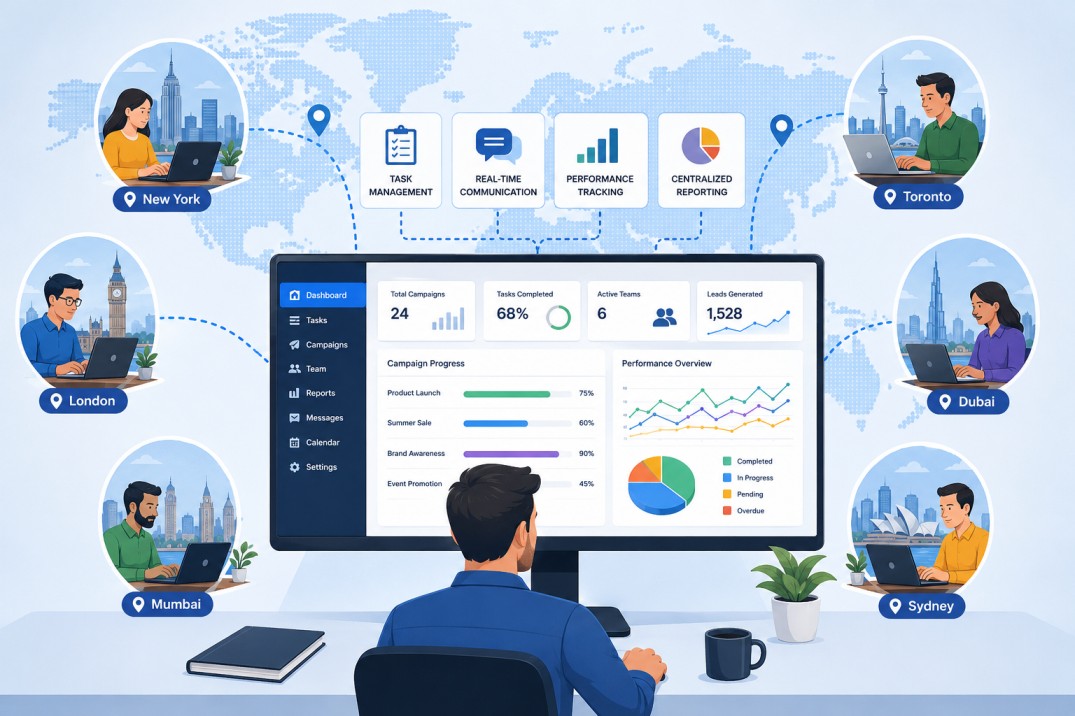
Managing marketing teams across multiple locations works best when tasks, communication, and reporting are handled in one structured system. When every team follows the same workflow, shares updates in real time, and tracks work centrally, campaigns move faster and fewer things slip through.
When teams operate from different cities or regions, it becomes difficult to see what each group is working on. Managers often depend on calls or scattered updates, which makes it hard to track campaign progress or identify delays early.
Field teams, office teams, and managers may all use different tools or channels. Important updates get missed, follow-ups are delayed, and teams end up working without full context.
Without a standard process, each location may handle campaigns differently. This leads to uneven results, inconsistent messaging, and confusion across teams.
Manual reporting or end-of-day updates rarely give a complete picture. Managers struggle to measure productivity, compare performance across locations, or identify what is working.
A centralized system brings all marketing activities into one place. Instead of managing tasks through emails, calls, or spreadsheets, everything is tracked in real time.
This improves:
Visibility into ongoing campaigns
Coordination between teams
Consistency in execution
Speed of decision-making
According to McKinsey & Company, organizations that improve communication and workflow alignment can increase productivity by up to 20–25%. That kind of improvement often comes from better coordination, not more effort.
Every team member should know what they are responsible for. When roles are clear, tasks are completed faster and with fewer dependencies.
Create a consistent workflow for all locations. Whether it’s campaign execution, lead follow-up, or reporting, every team should follow the same structure.
Instead of managing campaigns as a whole, divide them into smaller tasks. Assign deadlines, set priorities, and track each stage. This makes it easier to monitor progress and avoid delays.
Avoid scattered communication across multiple apps. Keep task updates, discussions, and approvals in one place so everyone stays aligned.
When teams update their work as it happens, managers don’t have to chase information. This reduces delays and keeps campaigns moving forward.
Marketing and sales often depend on each other. Sharing lead updates, campaign outcomes, and customer interactions helps both teams work more effectively.
Research from Harvard Business Review highlights that structured communication plays a major role in improving execution across distributed teams.
Managers should be able to see what is active, what is pending, and what has been completed. This helps identify issues before they affect results.
For teams working outside the office, visibility is often limited. Tracking daily activities ensures accountability and keeps work aligned with campaign goals.
Keeping all campaign details, updates, and reports in a single system prevents data loss and avoids duplication. It also makes it easier to review performance later.
Define what success looks like. Whether it’s task completion, lead conversion, or campaign performance, clear metrics help teams stay focused.
When performance data is available in real time, managers can quickly identify delays, missed follow-ups, or inefficiencies and take action.
Instead of relying on manual reports, use structured updates. This ensures accuracy and reduces the time spent on reporting.
According to Gartner, organizations that track performance consistently see better alignment and faster execution across distributed teams.
Managing multiple teams without the right tools leads to confusion and delays. A proper system helps bring everything together.
Task assignment and tracking
Real-time updates from all locations
Centralized dashboards for visibility
Reporting and performance insights
With the right setup, managers can monitor activities, assign work, and track results without constant follow-ups.
Relying only on spreadsheets and calls
Not having a standard workflow across locations
Delayed updates and reporting
Poor coordination between teams
Ignoring performance tracking
These issues usually don’t appear immediately, but over time they slow down execution and affect campaign results.
A simple structured approach can look like this:
Campaign tasks are assigned to each location
Deadlines and responsibilities are clearly defined
Teams update progress in real time
Managers track performance through a dashboard
Adjustments are made based on ongoing results
This kind of workflow reduces confusion and keeps all teams aligned.
Handle tasks, monitor team activities, and manage campaign execution from one platform using marketing staff management software. Keep your teams aligned across locations with real-time updates and clear workflows.
Managing marketing teams across multiple locations becomes easier when everything is structured and visible. Clear task assignment, real-time updates, and centralized reporting help teams stay aligned and reduce delays.
When businesses move away from scattered communication and manual tracking, they gain better control over campaigns and team performance. Platforms like UpTeams make it easier to manage tasks, track activities, and keep every marketing team connected, no matter where they are working from.
Start your free trial today