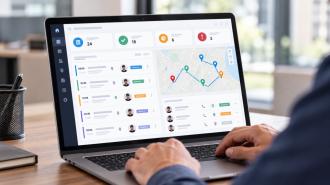
An automated leave approval process has become a practical necessity for businesses that want clarity, fairness, and control over employee time off. As teams grow and work patterns change, handling leave through emails, spreadsheets, or verbal approvals often creates confusion. Missed requests, incorrect leave balances, and delayed approvals quietly affect productivity and employee trust. This article explains why automation matters, how it works in real business settings, and what impact it has on managers, employees, and long term growth.
Modern workplaces deal with remote teams, flexible schedules, and overlapping responsibilities. Without a structured system, even a simple leave request can turn into a bottleneck that affects payroll, planning, and morale.
Manual leave management usually starts with good intentions but breaks down over time. What works for a small team quickly becomes unreliable as the business scales.
Common issues include
Leave requests lost in inboxes or chat tools
Managers forgetting to respond on time
Employees unsure whether their leave is approved
Incorrect leave balance calculations
Overlapping absences that disrupt projects
These problems are not just administrative. They directly affect team coordination and trust. When employees feel unsure about their leave status, they hesitate to plan personal commitments. Managers, on the other hand, struggle to track who is available and when.
Over time, these small gaps lead to frustration, repeated follow ups, and avoidable conflicts.
At its core, an automated leave approval process replaces informal steps with a clear and consistent workflow.
The typical flow looks like this
An employee submits a leave request through a central system
The system checks leave balances and company policies automatically
The request is routed to the right manager for approval
Managers approve or reject with a clear record
Leave balances and calendars update instantly
This structure removes guesswork from the process. Everyone knows where a request stands, who needs to act, and what rules apply. There is no need to search emails or ask HR for confirmation.
Automation does not remove human decision making. It simply ensures that decisions happen within a clear framework.
Speed is important, but accuracy is what protects the business in the long run. Manual leave tracking often leads to errors that surface much later, usually during payroll processing or audits.
Inaccurate leave data can cause
Overpayment or underpayment of salaries
Disputes over unused or excess leave
Compliance risks with labor laws
Loss of credibility for HR teams
Automation keeps leave balances updated in real time. Every approved or rejected request is recorded automatically. This reduces dependency on spreadsheets and manual adjustments that are prone to mistakes.
Accurate records also help leadership make informed decisions about staffing and workload distribution.
Managers play a critical role in approving leave, but manual systems make it hard to stay consistent. Requests arrive through multiple channels, and approval decisions are rarely documented clearly.
With automation
Every approval or rejection is logged
Decision timelines are visible
Managers have a clear view of team availability
Accountability is built into the process
This transparency protects both managers and employees. If questions arise later, there is a clear record of what was approved and when. Managers can also plan projects better by seeing upcoming absences in advance.
Accountability improves fairness and reduces the perception of bias in leave decisions.
Leave management is one of the most personal interactions employees have with internal systems. When it feels complicated or unclear, it directly affects satisfaction.
Automation improves the experience by
Giving employees instant visibility into leave balances
Removing the need to chase approvals
Clearly showing approval status
Applying policies consistently
Employees feel more confident when they know the rules and can see how decisions are made. This clarity reduces anxiety and helps build trust between teams and management.
A simple leave process also signals that the company respects employee time and personal commitments.
As businesses grow, leave management complexity increases. New departments, locations, and working styles introduce variations that manual systems cannot handle reliably.
An automated leave approval process supports growth by
Applying consistent policies across teams
Supporting remote and hybrid work models
Handling higher volumes of requests without delays
Providing data for workforce planning
Automation ensures that growth does not come at the cost of control. HR teams can focus on strategy instead of resolving avoidable administrative issues.
Labor laws and company policies around leave vary by region and employment type. Manual tracking makes it difficult to ensure consistent compliance.
Automation helps by
Enforcing policy rules automatically
Maintaining accurate historical records
Supporting audits with reliable data
Reducing disputes related to leave entitlements
When policies are applied uniformly, businesses reduce legal risk and build a culture of fairness. Clear records also simplify internal reviews and external audits.
Many organizations continue with manual processes until problems become impossible to ignore. Common warning signs include
Frequent approval delays
Repeated payroll corrections
Conflicting leave records
Employee complaints about lack of clarity
These signals indicate that the current system is no longer supporting the business. Switching to automation at this stage prevents further inefficiencies and restores confidence in internal processes.
Not all solutions fit every business. The right setup should support existing workflows without adding complexity.
Key factors to consider
Flexible policy configuration
Clear approval workflows
Easy access for employees and managers
Reliable reporting and records
A well designed leave management software integrates naturally into daily operations and reduces friction instead of creating it.
If your business is dealing with approval delays, unclear records, or growing administrative effort, adopting a structured system can make a real difference. A dedicated leave management software brings clarity, consistency, and accountability into a process that affects everyone.
Exploring a purpose built solution helps teams move away from manual work and focus on what actually matters.
An automated leave approval process is not just about convenience. It supports accuracy, fairness, compliance, and long term scalability. By replacing fragmented workflows with a clear system, businesses protect themselves from errors while improving the employee experience.
For organizations looking to simplify leave management without disrupting daily operations, UpTeams offers a practical approach designed to support growing teams and modern workplaces.
Start your free trial today