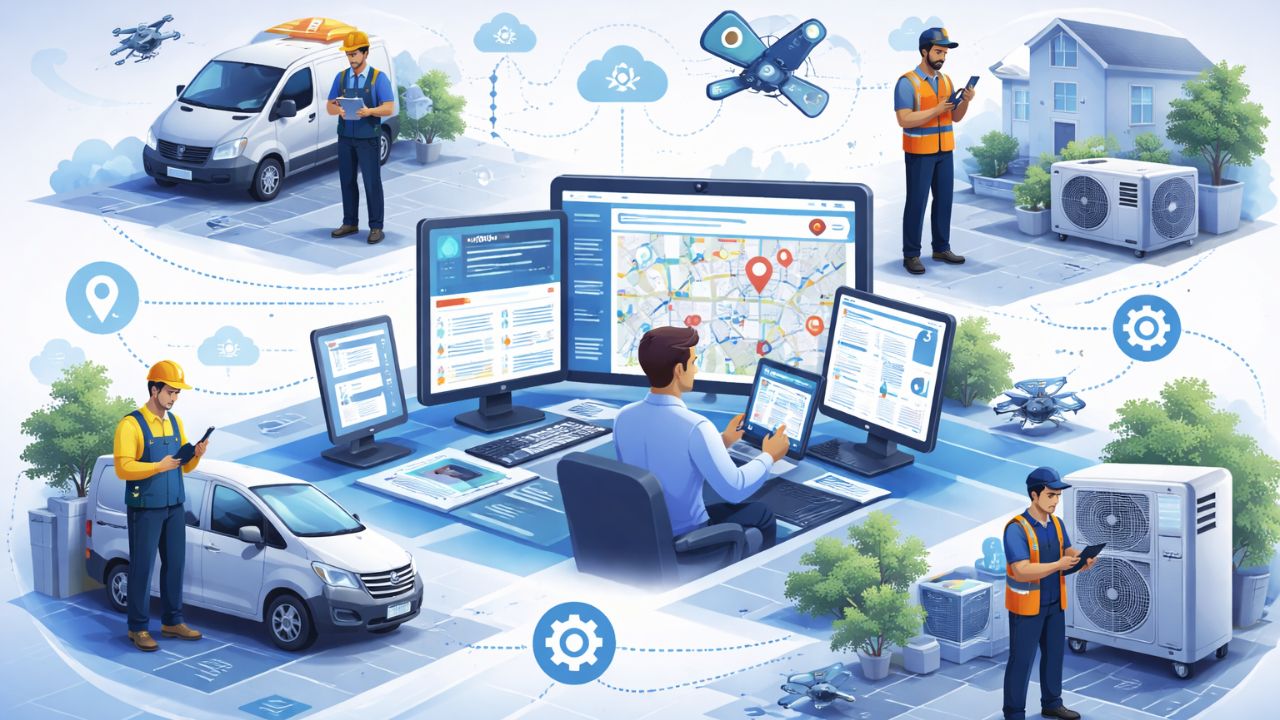
Field Force Management Trends in 2026 are no longer limited to large enterprises or tech driven companies. Any business that sends employees into the field, such as service providers, sales teams, technicians, or inspection staff, now depends on smarter systems to stay organized and competitive. Customers expect faster service, managers expect better visibility, and field employees expect tools that actually make their work easier. This article explains what is changing, why it matters, and how businesses can prepare in a clear and practical way.
Field work used to rely on phone calls, paper job sheets, and manual reporting. That approach worked when teams were small and customer expectations were lower. In 2026, this model simply cannot keep up.
Businesses now deal with:
Tighter delivery timelines
Higher customer service standards
Remote and distributed teams
Increased pressure to reduce costs
Field force management has shifted from basic coordination to full operational control. Managers need real time updates, not end of day reports. Employees need clear instructions, not constant calls. The focus is on efficiency, accuracy, and accountability without making work harder for the people on the ground.
The most important changes in field force management are practical. They solve real problems that businesses face every day.
Scheduling is no longer about assigning jobs manually at the start of the day. Modern systems use real data to decide who should do what and when.
Smart scheduling helps by:
Assigning tasks based on location, skill set, and availability
Reducing travel time between jobs
Avoiding overloading some workers while others stay idle
This leads to faster job completion and less frustration for field employees.
Tracking field staff does not mean watching every move. In 2026, the focus is on visibility, not control.
Real time tracking allows managers to:
Know which tasks are in progress
Respond quickly to delays or emergencies
Ensure employee safety during field work
When used correctly, tracking builds trust. Employees spend less time giving updates and more time doing their actual job.
Field employees spend most of their time on the move. Tools designed only for desktops fail in real world conditions.
Mobile first systems offer:
Simple task lists and job details on phones
Offline access in low network areas
Easy photo uploads, notes, and signatures
When tools are easy to use, adoption improves and errors decrease.
One of the biggest complaints from field teams is paperwork. Automation removes repetitive tasks that waste time.
Examples include:
Automatic attendance logging
Instant job status updates
Auto generated service reports
This saves hours each week and improves data accuracy.
Data is only useful when it answers real questions. In 2026, businesses focus on clear insights rather than complex dashboards.
Useful analytics help managers understand:
Which jobs take longer than expected
Where delays usually happen
How efficiently teams use their time
Common metrics include job completion rates, response times, and travel efficiency. These insights help improve planning, training, and customer satisfaction.
Accountability is one of the strongest benefits of digital field management systems. Every task, update, and completion time is recorded automatically.
This creates:
Clear responsibility for each job
Transparent performance reviews
Reliable records for audits and clients
Employees know what is expected, and managers rely on facts instead of assumptions.
As more data is collected from the field, security becomes critical. Field staff often use personal or shared devices, which increases risk.
Modern systems address this by:
Limiting access based on job roles
Protecting sensitive customer information
Keeping activity logs for compliance needs
This is especially important for industries like utilities, healthcare services, and inspections.
High turnover is common in field roles. Training new staff quickly is essential.
Digital tools support onboarding by providing:
Step by step task instructions
Standard checklists for common jobs
In app guidance that reduces mistakes
New employees become productive faster and experienced staff spend less time supervising basic work.
Not every platform fits every business. Choosing the right solution requires looking beyond features.
Businesses should focus on:
Ease of use for field employees
Flexibility to match real workflows
Ability to scale as teams grow
A system that looks powerful but is hard to use often fails in practice.
Successful companies test new tools with small teams before full rollout. They listen to employee feedback and adjust processes accordingly.
Preparation includes:
Training managers first
Setting clear usage guidelines
Measuring impact on efficiency and customer satisfaction
Technology works best when it supports people, not when it forces change without support.
Strong field management depends on systems that reduce complexity instead of adding to it. Businesses looking to streamline scheduling, tracking, and reporting often choose a reliable Field Services Management App like Upteams to support their teams and improve daily operations.
Field Force Management Trends in 2026 show a clear direction. Businesses that rely on field teams must move toward smarter scheduling, better visibility, automation, and secure data handling. These changes are not about technology alone. They are about making work simpler, faster, and more reliable for everyone involved. Companies that adapt early will deliver better service, retain skilled workers, and stay competitive in the years ahead.
Start your free trial today