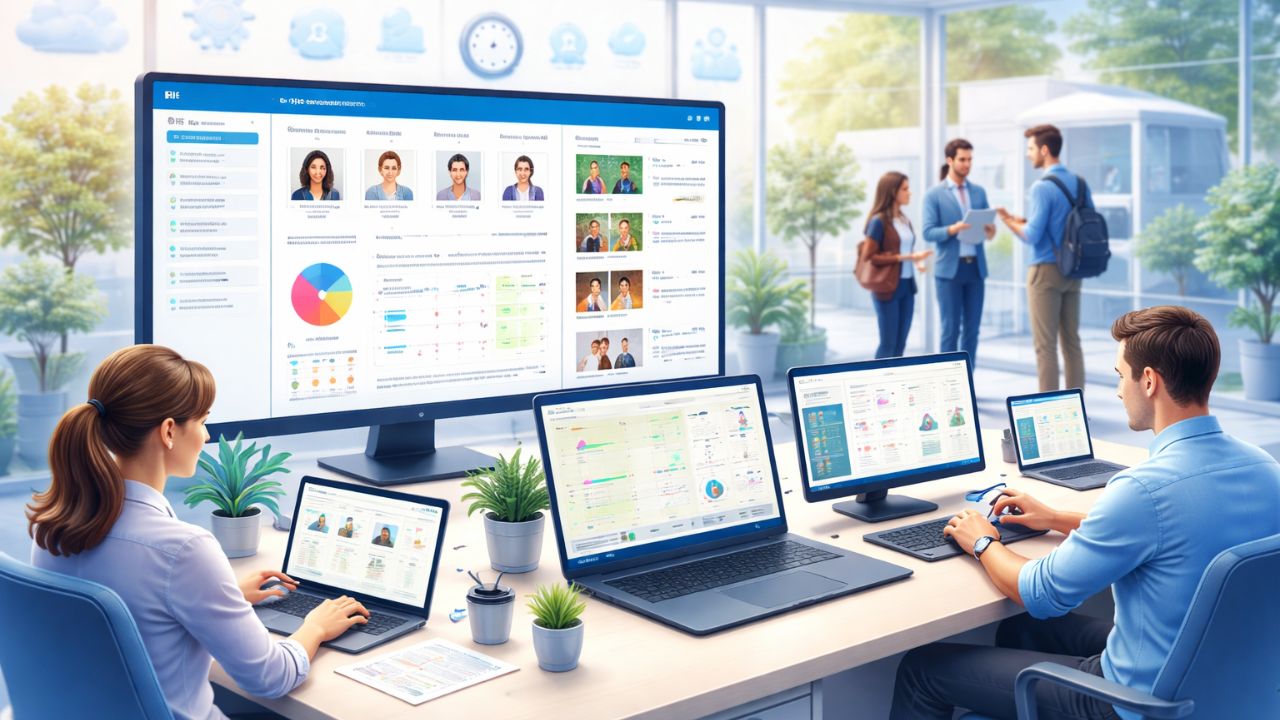
HR Software has become an essential tool for startups that want to manage growing teams without adding unnecessary complexity. Early stage companies often begin with spreadsheets, shared documents, and manual processes. While this may work for a small team, it quickly becomes difficult to manage as hiring increases and responsibilities expand.
According to the Society for Human Resource Management (SHRM), HR automation can significantly reduce administrative workload and improve workforce management accuracy. For startups, this means less time spent on paperwork and more time focused on product development, customers, and business growth.
Instead of juggling employee records, attendance sheets, hiring pipelines, and payroll data across multiple tools, startups can manage everything from a single HR platform. This helps founders and managers stay organized while keeping employee operations smooth and transparent.
Most startups begin with small teams where communication is informal and processes are flexible. As the company grows, managing people becomes more structured and demanding.
Without a proper system in place, several issues begin to appear:
Employee information gets scattered across documents and emails
Hiring processes become inconsistent
Payroll calculations require manual verification
Leave requests and attendance tracking become difficult to monitor
Compliance documentation becomes harder to maintain
Founders and managers often handle HR responsibilities alongside product, marketing, and finance tasks. This creates operational pressure and increases the chances of mistakes.
This is where structured HR tools begin to make a difference. They provide a centralized system that keeps employee operations organized and easy to manage.
The main value of HR software comes from simplifying essential employee management tasks. Instead of building separate processes for every HR activity, startups can use one platform that organizes everything.
Startups need quick access to employee data, especially as teams grow. HR systems store employee information in a centralized database that can be updated and accessed easily.
Typical records include:
Employee contact details
Job roles and departments
Contracts and documentation
Employment history and performance notes
Having all information in one place reduces confusion and eliminates the need to search through multiple files.
Hiring is one of the most important activities for a growing startup. Managing applicants manually can lead to missed candidates or inconsistent evaluations.
HR platforms help organize recruitment through:
Job listing management
Applicant tracking
Interview scheduling
Candidate evaluation records
With structured hiring workflows, startups can make better hiring decisions and maintain consistent recruitment standards.
Payroll management can quickly become complicated when salaries, taxes, and employee benefits must be calculated accurately.
HR software automates payroll processing by handling:
Salary calculations
Tax deductions
Benefits and allowances
Payroll reports and payment history
This reduces errors and helps startups maintain compliance with payroll regulations.
Managing daily employee activities becomes easier when information is organized and accessible. HR platforms support everyday operations in several practical ways.
Attendance and leave management becomes automated, allowing employees to submit requests while managers review approvals in one system. This eliminates the need for manual tracking.
Team communication also improves because HR systems often include internal announcements, employee directories, and updates. Employees know where to find important company information without relying on scattered messages.
Managers also gain better visibility into team performance. With access to employee records and activity data, they can evaluate performance and provide feedback more effectively.
These improvements help startups maintain operational clarity even as the team expands. Many growing companies also use task management software to assign responsibilities, monitor team progress, and ensure daily work is completed on time.
Many startups operate with distributed teams or remote employees. Managing remote work without proper systems can lead to communication gaps and unclear responsibilities.
HR platforms help solve these problems by supporting remote team management through digital processes.
For example, new employees can complete onboarding documentation online without being physically present in the office. Managers can also track attendance and work activity through digital logs and reporting tools.
Documents such as contracts, company policies, and employee agreements can be stored securely and accessed whenever needed.
This structured approach helps startups maintain accountability while giving employees the flexibility to work from different locations.
Startups with distributed teams often rely on remote staff management software to monitor attendance, track employee activity, and manage tasks from a single platform.
Startups must manage their budgets carefully, and operational efficiency is essential for long term growth.
Manual HR processes require significant time from founders, managers, or administrative staff. Tasks such as tracking leave, updating employee records, calculating payroll, and managing recruitment pipelines consume hours every week.
HR software reduces this administrative workload by automating repetitive tasks.
Some of the most common benefits include:
Reduced time spent on HR administration
Fewer payroll errors and corrections
Faster onboarding for new employees
More organized recruitment processes
Over time, these improvements translate into measurable cost savings and better operational control.
Many startups delay implementing HR systems until problems begin to appear. Recognizing early warning signs can help businesses adopt the right tools before operations become difficult to manage.
Your startup may benefit from HR software if:
Employee information is stored in spreadsheets
Payroll processing requires manual calculations
Hiring processes lack structure
Leave tracking becomes difficult to manage
Compliance documents are scattered across different files
If these challenges begin to slow down daily operations, it may be time to move toward a dedicated HR system.
Not all HR tools are designed for the needs of small and growing businesses. Startups should evaluate several factors before selecting a platform.
Ease of use should be a top priority. HR systems should simplify work rather than introduce unnecessary complexity.
Scalability is also important because startups grow quickly. The software should support increasing employee numbers without requiring major system changes.
Integration with other tools such as accounting software or payroll systems can also improve workflow efficiency.
Security and compliance features should also be considered, especially when storing employee records and financial data.
Selecting the right HR Software ensures that the system continues to support the business as it expands.
If your startup is looking to organize employee management, payroll, hiring, and internal processes in one platform, choosing the right solution can make a significant difference.
Explore the Best HR Management Software to see how a structured HR system can simplify team management and help your startup operate more efficiently.
Managing a growing team is one of the biggest operational challenges startups face. Without structured processes, employee management can quickly become complicated and time consuming.
HR Software provides a practical solution by organizing employee data, recruitment, payroll, and daily HR operations into one system. This allows startup founders and managers to focus on building their business instead of managing administrative tasks.
By implementing the right HR tools early, startups can build a more organized workplace, improve employee experience, and support long term growth. Businesses that adopt structured HR systems are better prepared to scale efficiently and maintain strong team management practices with solutions like those offered by Upteams.
Start your free trial today