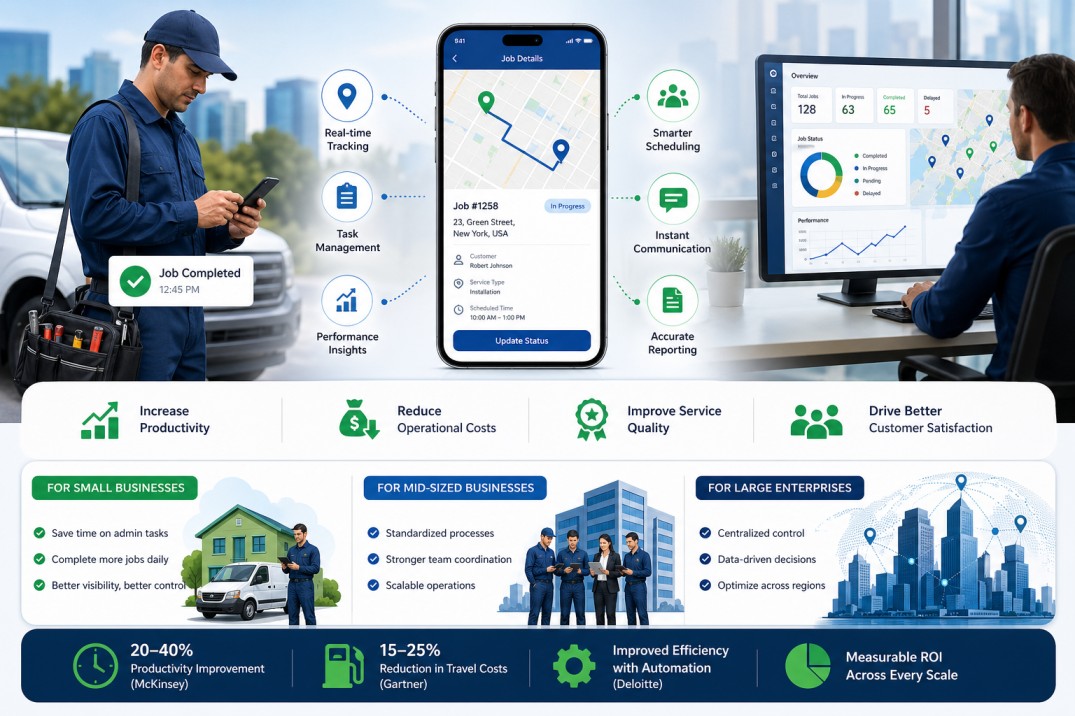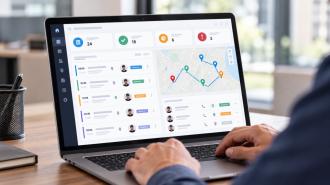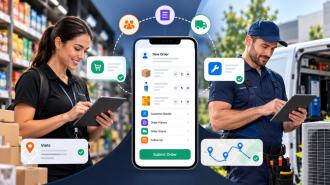
Field teams run on time, movement, and coordination. When those pieces are managed manually, costs rise and visibility drops. A Field Service Management App improves ROI by cutting admin work, increasing the number of completed jobs per day, and giving real-time visibility into what’s actually happening on the ground.
For small businesses, the gains show up as time saved and fewer missed jobs. For mid-sized companies, it’s consistent processes and better coordination. For large enterprises, the impact is control, analytics, and reduced operational leakage across regions. The sections below break down where the returns come from, what they look like by business size, and how to measure them in practical terms.
In field operations, ROI is not limited to revenue growth, especially when businesses rely on field employee tracking software to manage daily activities. It includes:
Time saved on reporting and coordination
Costs reduced in travel, admin, and rework
Productivity gains from better scheduling and tracking
Error reduction in attendance, job logs, and billing
A simple way to view it:
ROI = (Time saved + Costs reduced + Revenue gained) – Total investment
Field operations depend on people moving between locations. That introduces variables:
Travel time and routing
Job allocation and delays
Accuracy of field updates
Because of this, even small inefficiencies compound quickly.
Without a system, common losses include:
Missed or delayed client visits
Unverified attendance or check-ins
Late or incomplete reports
Poor communication between office and field
These don’t always show up as a line item, but they affect margins every day.
Teams spend more time traveling than working when there is no real-time location tracking for field teams in place. Poor routing leads to:
Extra fuel costs
Fewer jobs completed per day
Paper forms or WhatsApp updates slow everything down:
Managers make decisions on outdated data
Admin teams spend hours consolidating reports
When there’s no live visibility:
It’s hard to verify visits
Performance gaps go unnoticed
Delays and missed updates lead to:
Lower satisfaction
Lost repeat business
Less paperwork and admin overhead
Fewer coordination calls
Lower travel costs with route planning
More jobs per agent per day
Smarter task allocation based on location and availability
Live tracking of field activity
Faster decisions when something goes off track
Accurate scheduling
On-time arrivals and updates
Clear reports on performance
Trends that help plan staffing and routes
Industry benchmarks support these gains. Insights from McKinsey & Company indicate 20–40% productivity improvement in field operations with digital tools. Research by Gartner shows 15–25% travel cost reduction through optimized routing. Studies from Deloitte highlight measurable efficiency gains from workflow automation.
Limited staff handling multiple roles
Tight budgets
Heavy reliance on manual processes
Attendance, tasks, and reporting move to one system
Less dependency on spreadsheets and calls
20–30% reduction in admin time
Faster job completion cycles
Better visibility into daily work
A small appliance repair service assigns jobs through calls and tracks updates on paper. After moving to a field app:
Technicians receive jobs on their phones
Location-based assignment reduces travel
End-of-day reporting happens automatically
The result is more jobs completed per day without increasing staff.
Teams spread across cities or regions
Inconsistent processes
Communication gaps between office and field
Standard workflows for task assignment and updates are easier to maintain with field force management software built for scaling operations.
Central dashboard for managers
30–40% productivity improvement
Fewer delays due to miscommunication
More accurate reporting
A regional sales team managing distributors struggles with daily reporting. With a field system:
Visits are logged in real time
Managers track coverage and follow-ups
Sales data syncs automatically
Coordination improves, and managers spend less time chasing updates.
Large workforce across multiple locations
Different teams, regions, and processes
Higher risk of inefficiencies
Centralized control across all regions
Data-driven planning and forecasting
Reduced operational leakage
Better compliance and tracking
Improved forecasting accuracy
A nationwide logistics company tracks deliveries and field agents. With a centralized system:
Routes are optimized
Delays are flagged in real time
Performance is measured consistently across regions
Even small efficiency gains at scale translate into significant cost savings.
Software subscription
Setup and onboarding
Training for field teams
|
Factor |
Without FSM App |
With FSM App |
|
Reporting |
Delayed |
Real-time |
|
Productivity |
Inconsistent |
Optimized |
|
Visibility |
Limited |
Full |
|
Decision Making |
Reactive |
Proactive |
The key is that most gains come from ongoing efficiency, not one-time savings.
Verified check-ins and job logs reduce false reporting.
Historical data helps plan routes, staffing, and workloads.
Real-time alerts allow quick fixes before problems grow.
Clear tracking improves ownership across teams.
Faster and more reliable service improves repeat business.
Immediate visibility into field activity
Faster reporting and fewer delays
Noticeable productivity gains
Reduction in admin and travel costs
Stronger operational control
Improved revenue through better service delivery
Industry type: logistics, service, pharma, sales
Team size: larger teams see higher absolute gains
Adoption rate: consistent usage matters
Feature usage: tracking, reporting, automation
Poor onboarding and training
Resistance from field staff
Using only basic features
No defined KPIs
Track:
Jobs per day
Travel time
On-time completion
Adoption is key. Keep workflows simple.
Automate task assignment, reporting, and alerts using field sales and service management tools designed for real-time execution.
Use dashboards to identify gaps and improve processes.
Small adjustments in routing and scheduling can add up.
Businesses with field sales teams
Companies managing service technicians
Organizations with delivery operations
Teams working across multiple locations
If your operations depend on people working outside the office, the impact is direct.
Managing field teams without real-time visibility leads to missed opportunities and rising costs. With UpTeams, you can streamline operations, monitor performance, and improve efficiency across your entire workforce from a single platform designed for growing businesses.
ROI in field operations is built over time through better visibility, faster execution, and consistent processes. Small businesses benefit from efficiency and cost control. Mid-sized companies gain structure and scalability. Large enterprises achieve control and measurable optimization across regions.
A Field Service Management App is not just about tracking employees. It’s about improving how work gets done every day. Platforms like UpTeams field service software help bring that structure by combining tracking , task management, and reporting into one system, making it easier to measure and improve ROI over time.
If your current setup relies on manual updates or scattered tools, that’s usually where the biggest gains are waiting.
Start your free trial today